
Subframe Rust: Repair, Protect, or Replace?
Posted by Parts Depot on Sep 12th 2026
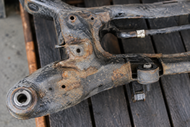
Light surface oxidation and a structurally weakened subframe are different conditions. The decision to repair, protect, or replace the assembly depends on remaining metal integrity, cracks, deformation, and the condition of the mounting points. A photograph or a fresh coat of paint cannot always establish whether a structural member is safe.
Surface rust versus structural corrosion
| Observation | What it may mean | Practical next step |
|---|---|---|
| Thin discoloration with no obvious flaking | Potentially superficial oxidation | Inspect the full assembly and assess metal condition before treatment |
| Thick flakes or layered scale | Possible significant material loss beneath the surface | Have a professional assess remaining integrity |
| Perforation or an opening caused by corrosion | Metal has been lost through the section | Treat as a structural concern; obtain repair guidance before driving |
| Cracked bracket or splitting seam | Possible failure at a load-bearing location | Stop treating it as a cosmetic issue; arrange assessment |
| Fresh coating over rough or obscured areas | Condition is not visible enough to judge | Request better documentation or inspect in person |
There is no universal photograph-based percentage of rust that makes every subframe safe or unsafe. Location matters: damage around a suspension attachment or body mount can be critical even if the rest of the assembly looks presentable.
Symptoms that justify inspection
A new clunk, changing wheel position, steering instability, unusual tire wear, or visible movement at a mounting point should be investigated. These symptoms have several possible causes; they do not prove corrosion is the cause. The inspection needs to connect the symptom to the failed component.
If a structural mounting area is cracked, perforated, or moving abnormally, do not assume normal driving is safe. Arrange a professional assessment and towing when structural safety is uncertain. Avoid crawling beneath a vehicle supported only by a jack.
Where to inspect on a subframe
- Body mounting sleeves, bolt locations, and the surrounding metal.
- Control-arm brackets and other suspension pickup points.
- Powertrain or differential-support areas where present.
- Welded seams, overlapping sections, and pockets that can retain debris.
- Upper surfaces that face the body and are absent from many listing photographs.
- The body or chassis attachment points above the removable member.
The last item changes the repair decision. A replacement subframe can be sound while the structure it bolts to is not. Have the shop evaluate both before ordering a part. Do not probe or strike a potentially failed structural assembly as a casual DIY test.
Can a rusty subframe be welded?
Structural welding suitability depends on the material, damage, location, and manufacturer’s repair guidance. A patch over thin or corroded metal does not automatically restore the original load path or geometry. Ask a qualified structural repair professional whether an approved repair exists for the actual damage.
When metal loss is widespread or a load-bearing attachment is compromised, replacing the assembly with a sound, correctly matched part may be the appropriate route. Do not treat an improvised welded plate as equivalent to a verified replacement. The body mounting structure still needs inspection.
Will rust converter or undercoating solve it?
Surface treatment can be part of protecting metal judged suitable for continued use. It does not replace missing steel, close a structural crack, or straighten a bent bracket. Inspect first, then follow an appropriate preparation and coating process that preserves drainage and access to necessary service points.
For a used part, ask for photographs before heavy refinishing when possible. A black finish may be cosmetic, protective, or hiding poor condition. Evaluate the metal and mounting areas rather than using paint color as evidence of quality.
Choosing a replacement that does not repeat the problem
Ask for current photographs of the actual donor assembly from both sides. Look for heavy scaling, perforation, cracks, displaced mounting holes, collision distortion, and earlier welded repairs. Request details about missing brackets and seized hardware.
The donor’s location can provide context about road-salt exposure, but it is not proof of structural condition. A part from a warm climate can still be damaged, and an older part from a cold climate is not automatically unusable. Inspect the actual assembly and confirm fitment using the part-matching checklist.
Check manufacturer programs before paying
Run the VIN through NHTSA’s recall lookup and contact the manufacturer or dealer about any applicable coverage. Recall status, warranty extensions, and service campaigns are different questions. Ask for the answer for your specific VIN and market.
Do not infer eligibility from another owner’s forum post or an article about a different year. Equally, no open recall does not mean a rusty assembly has passed a structural inspection.
Plan the complete rust-related repair
Corrosion can seize bolts into sleeves, damage captured nuts, and turn component transfer into additional labor. Ask the shop to separate the basic replacement from an allowance for removal problems. Determine how it will obtain approval if it finds damaged body mounts or unusable arms.
Include the part, freight, hardware, wear components, alignment, and any affected brake work in the estimate. See the crossmember replacement cost guide for a comparison worksheet. Return to the vehicle guide index for assembly-specific buying questions.
Buying a used replacement from Parts Depot
Search Parts Depot for a replacement subframe and confirm the application, actual condition, and included components before ordering. Prepare the VIN, vehicle configuration, assembly location, and photographs of the damaged area. If the body structure is also compromised, resolve the repair plan with the shop first.
Browse available crossmembers
Browse Subframes & Crossmembers, or call (561) 231-0439 with your vehicle details to ask about fitment and availability.
Need the part covered in this guide?
Shop used OEM replacement parts from Parts Depot with free U.S. shipping, a 1-year replacement warranty, and help confirming fitment before you order.